
Rutgers Student Achieves 20/20 Vision With ICL Surgery

Musician Abi Titus expresses her love of music by playing concerts with her church worship band.
Behind the scenes, severe astigmatism and high nearsightedness made it challenging for her to read sheet music and tablature. For years, Titus adapted to her visual limitations and continued performing on stage.
“I spent a lot of extra time memorizing the music. It was so hard for me to read from a distance while also concentrating on playing,” she said. “I’m squinting. I can’t see the music I’m playing. I love playing all types of music, but that was definitely a struggle.”
Today, the 21-year-old Wayne, New Jersey, woman plays music with ease following EVO Implantable Collamer® Lens (ICL) surgery.
Patient Modifies Lifestyle to Combat Poor Vision
Most vision problems happen when the eye has trouble focusing light the right way. For Titus, nearsightedness made distant objects look blurry, and severe astigmatism distorted shapes and details.
 Growing up, Titus wore thick glasses with a strong prescription that changed frequently, but still she struggled to see clearly. Even with poor eyesight, she modified her lifestyle to achieve her goals.
“Driving was very difficult, especially reading street signs, reading license plates, even directions, too,” she said. “There were a lot of areas in which I struggled because of my vision. But I didn’t let it hold me back from my hobbies. I had to go the extra mile.”
Her vision challenges continued at the School of Engineering at Rutgers University — New Brunswick, where she studies chemical engineering.
“It was an ongoing conversation,” Titus said. “Am I going to get some kind of vision surgery so that I don’t have to be like this for the rest of my life?”
Last summer, her glasses broke while on a family trip to Niagara Falls, leaving her unable to see clearly. Titus told her parents it was time for vision correction surgery.
“I’m going to be on my own,” she said. “I can’t subject myself to an experience like this where my safety is compromised because I can’t see.”
Eye Exam Determines Vision Correction Option
To find a solution for her eyesight, Titus researched vision correction surgeries, including LASIK (Laser-Assisted In Situ Keratomileusis), PRK (Photorefractive Keratectomy) and ICL.
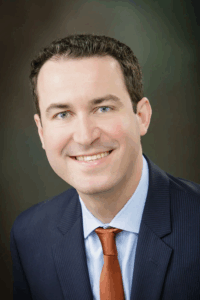 Last winter, she scheduled an appointment with ophthalmologist Adrian Jachens, MD, to discuss her options. He conducted a full evaluation of her eyes to determine the best treatment for her vision.
“Refractive surgery evaluation ruled out LASIK and PRK for her,” Dr. Jachens said. “Then, we agreed that ICL would work well for her because she was a good candidate for it.”
Refractive surgeries, like LASIK and PRK, treat vision issues by surgically reshaping the cornea. By comparison, ICL is a minimally invasive, reversible vision correction procedure. During surgery, your doctor places a soft, biocompatible lens between your iris and natural lens.
“[ICL] is a really refined tool that is very safe, very effective,” Dr. Jachens said. “It really expands the amount of people that you can help in the realm of refractive surgery.”
Adults 21-45 years of age who are nearsighted, with and without astigmatism, are good candidates for ICL.
Titus Opts for ICL Surgery at ASC
Weeks after turning 21, Titus scheduled ICL surgery with Dr. Jachens on December 23 at an ambulatory surgery center (ASC). ASCs offer same-day procedures using advanced technology in a comfortable setting, often at reduced costs and with the convenience of recovering at home.
“Because this is intraocular surgery, you need a very sterile environment,” Dr. Jachens said. “The ambulatory surgical center experience is always going to be best for both surgeon and patient.”
Cataract surgery typically involves operating on one eye at a time, whereas doctors perform ICL surgery on both eyes during the same visit.
“We call it a bilateral procedure because we’re doing both eyes, but they’re not done at the same time,” Dr. Jachens said. “They are two entirely separate surgeries from soup to nuts. The real terminology is same day, sequential.”
Titus praised the ASC’s clinical staff for their attention during her surgery.
“They were very in tune to my needs, especially during the procedure,” she said.
The center released Titus to recover at home. She returned the next day, Christmas Eve, for her first post-op visit. Dr. Jachens revealed that Titus now had 20/20 vision in both eyes.
“It’s a miracle! Like, I was blind, but now I see,” Titus said. “I’m always plugging this to my friends, my colleagues, my peers, my family, everybody. I have to talk about it, and people love hearing about it as well.”
Dr. Jachens prescribed eye drops and instructed her to wear sunglasses for several days because of light sensitivity.
“She was a 100 percent success,” Dr. Jachens said. “It’s really cool because I don’t think people who have relatively good vision can appreciate just how debilitating that sort of myopia really is.”
Finding Vision Clarity and Personal Confidence
Eight months after ICL surgery, Titus reads musical notes with ease and plays her instruments with passion. Her sheet music and tablature are now as clear as her sight.
“With music I could catch up so much faster and play so much better because I could literally read what I was playing,” she said. “It wasn’t a concern. I could relax a little bit. It definitely contributed to a greater sense of ease overall in everything that I did.”
Getting ICL boosted Titus’ self-confidence and made it easier to read the board in class, which helped her focus better in her studies at Rutgers.
“It’s definitely given me an advantage that I didn’t have before, and I’m so grateful for that,” Titus said. “It’s definitely changed my life for the better.”
Dr. Jachens celebrates Titus’ results and her new life with clear vision.
“It was great getting to know her and being part of this journey for her,” he said. “I think, going forward, the rest of her life is just going to be so much better.”
Schedule Your Comprehensive Eye Exam
Your vision is an important part of your overall health. A comprehensive eye exam with dilation takes only an hour but provides a year of benefits. During the exam, your eye doctor will check for the following:
- Refractive error: nearsighted, farsighted or astigmatism
- Focusing problems, including presbyopia
- Eye diseases, such as glaucoma, macular degeneration and cataracts
“Comprehensive eye exams are obviously very important,” Dr. Jachens said. “You go to your primary care doctor for checkups. You go to your dentist for checkups and cleaning. So, it’s just part of regularly scheduled maintenance of the human body.”
Are you interested in reducing your need for glasses or contact lenses? Do you need a procedure, like cataract surgery? Prioritize your vision and schedule a consultation or an eye exam with your ophthalmologist.
This article is designed for educational purposes only. The information provided should not be used for diagnosing or treating a health concern or disease. It is not a substitute for professional care. If you have or suspect you may have a health concern, you should consult your healthcare provider.